📞 0485 2832361, 2836300 ✉️ conclave@nirmalacollege.ac.in
Organised by Research Development Cell(RDC) & Internal Quality Assurance Cell (IQAC)
In Collaboration with College Development Council, Mahatma Gandhi University, Kottayam, Kerala
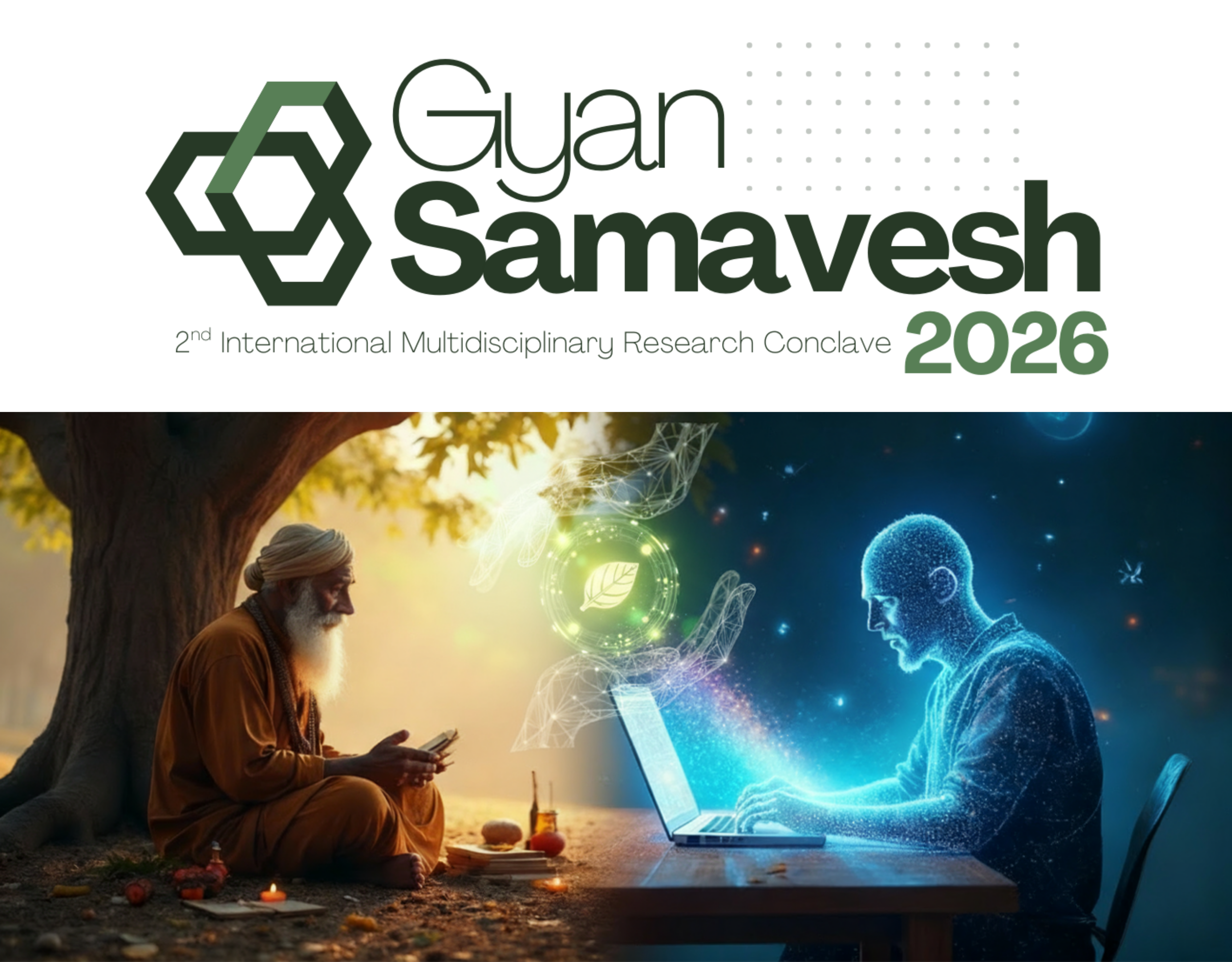
Welcome to Gyan Samavesh 2026

Second International Multidisciplinary Research Conclave

Sustainable Future through Indian Knowledge Systems and Modern Innovation

Venue College Auditorium, Nirmala College
Dates 2026 February 25,26
Mode Hybrid (Online & Offline)
Organisers RDC & IQAC
Register Now

About the Conclave

Nirmala College, Muvattupuzha (Autonomous), proudly presents 'GYAN SAMAVESH' - the Second Annual Multidisciplinary Research Conclave, an eminent forum dedicated to fostering scholarly exchange and cross-disciplinary collaboration.

This prestigious 2026 edition is envisioned as a celebration of the dynamic confluence between the time-tested wisdom of Indian Knowledge Systems (IKS) and the transformative potential of modern scientific and technological innovations. With sustainability as its guiding theme, the conclave will bring together thought leaders, eminent researchers, academicians, industry experts, and young innovators from diverse fields.

Over two intellectually vibrant days, participants will explore pathways to address some of the most pressing environmental, social, and economic challenges of our era, weaving together the heritage of the past with the possibilities of the future to co-create actionable, sustainable solutions for generations to come.
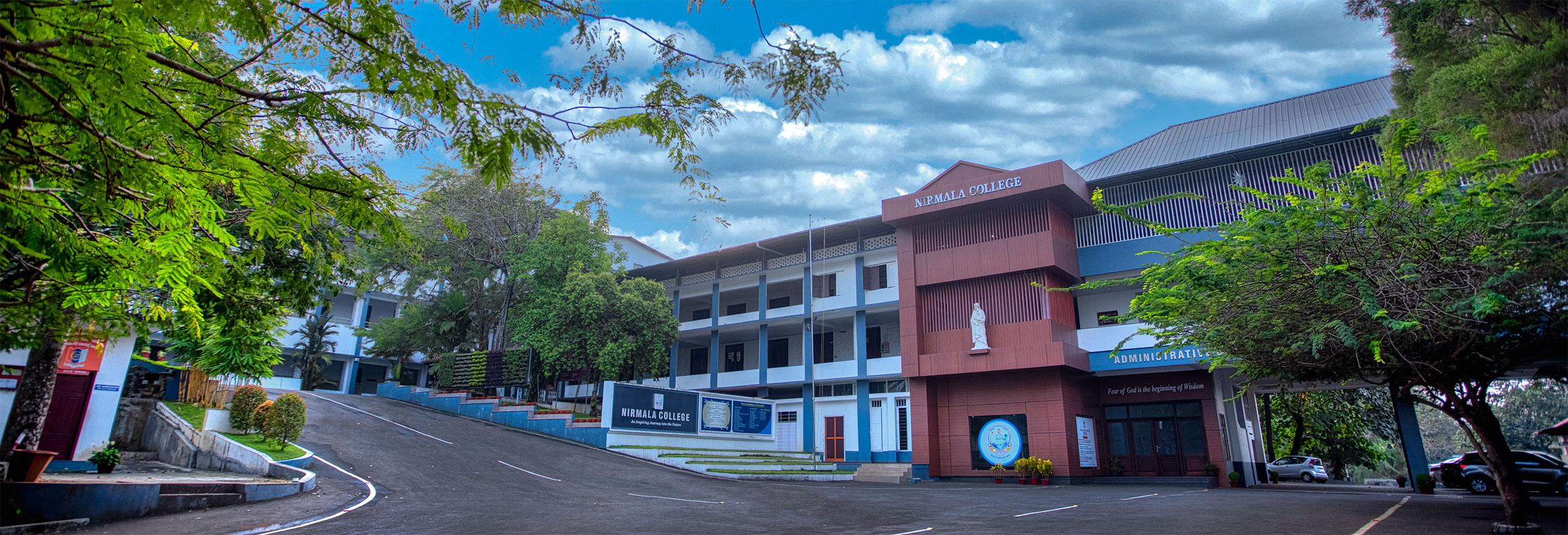
Nirmala College Campus

Conference Sub-Themes

Science Stream

  • Ancient Astronomy and Contemporary Astrophysics
  • Ancient Dye Extraction from Plants and Modern Analytical Chemistry
  • Eco-Friendly Natural Dyes, Pigments, and Green Chemistry
  • Fractal Geometry in Nature: Indigenous Patterns and Mathematical Modelling
  • Graph Theory for Sustainability: Networks in Nature, Culture, and Technology
  • Indigenous Agricultural Practices for Biodiversity Conservation
  • Indigenous Animal Behavior Observations and Modern Wildlife Ecology
  • Indigenous Knowledge and Air Quality Management
  • Indigenous Plant Classification Systems and Modern Taxonomy
  • Local Weather Prediction Knowledge and Climate Modelling
  • Medicinal Plant Phytochemistry: Bridging Folk Remedies with Modern Drug Discovery
  • Natural Ecosystem Restoration and Modern Carbon Capture Technologies
  • Physics of Indigenous Energy Devices and Modern Renewable Technologies
  • Sustainable Fisheries: Traditional Practices with Modern Science
  • Traditional and Modern Plant Biotechnology for Crop Improvement
  • Traditional Ecological Ethics and Modern Environmental Policies
  • Traditional Forest Conservation and Modern Ecological Research
  • Traditional Metallurgy and Modern Materials Science
  • Traditional Water Harvesting Systems and Modern Water Management
  • Ecology, Animal Taxonomy, and Ecotoxicology

Social Science Stream

  • Community-Based Circular Economy for Climate Action
  • Corporate Social Responsibility Rooted in Cultural Heritage
  • Cultural Pathways to Green Marketing and Consumer Behaviour
  • Eco-Tourism: Blending Heritage with Sustainability
  • Ethno Knowledge and Health System
  • Heritage and Sustainability Tourism
  • Indigenous Methods in Environmental Accounting and Reporting
  • Innovation Management that Respects Cultural Contexts
  • Integrating Indigenous Economic Practices with Modern Sustainability Models
  • Merging Green Finance with Local Community Investment Practices
  • Migration Narratives: Traditional Coping Strategies and Modern Policy
  • Policy Frameworks that Integrate Traditional Governance for Sustainability
  • Rural Wisdom and Climate-Resilient Business Models
  • Sustainable Development Goals (SDGs) in the Light of Traditional Practices
  • Traditional Conflict Resolution in Climate Governance
  • Traditional Governance and Policy Framework
  • Traditional Risk Management Practices and Modern Insurance Solutions
  • Traditional Trade Networks and Lessons for Global Sustainability

Literature & Humanities Stream

  • Narratives Drawing from Folklore and Local Knowledge
  • Oral Traditions and Folk Narratives: Preserving Ecological Wisdom through Indian Literature
  • Environmental Wisdom in Folklore, Myths, and Epics
  • Translation and Transmission of Indigenous Knowledge: Indian Literature in the Global Context
  • Environmental Ethics in Literature: Traditional Nature Sensibility and Contemporary Sustainability
  • Comparative Studies of Ancient and Modern Environmental Philosophy
  • Traditional Ethical Frameworks for Environmental Decision-Making
  • Representation of the Third Gender in Mythology and Modern Literature
  • Women's Voices in Literature: From Traditional Knowledge to Modern Feminist Consciousness
  • Artistic Expressions Merging Cultural Heritage and Sustainability
  • Film and Theatre Depictions of Traditional and Modern Sustainability Journeys
  • Music, Dance, and Performance as Tools for Climate Advocacy
  • Human–Environment Relationships in Traditional Art and Literature
  • Ecological Imperialism Revisited: Voices from Tradition and Science
  • Environment, Sustainable Development and Climate Change in different narratives
  • Ecofeminism in Traditional and Modern Writings: Women, Nature and Sustainability
  • Holistic Development: Physical Activity, Mental Health and Integration of Tradition
  • Movement, Mindfulness and Mastery: Reimagining Physical Well-Being
  • Migration Narratives: Weaving Historical and Modern Perspectives

Applied Science Stream

  • AI and Big Data to Preserve and Enhance Traditional Environmental Knowledge
  • AI-Powered Rehabilitation Tools for Children with Special Needs
  • Blockchain for Protecting Traditional Knowledge Rights
  • Cloud-Based Platforms for Knowledge Sharing between Scientists and Indigenous Communities
  • Cyber-Physical Systems to Preserve and Monitor Heritage Landscapes
  • Data Analytics for Documenting Indigenous Sustainability Practices
  • Entropy, Extropy, and Measures of Uncertainty
  • Green Computing Solutions Informed by Low-Impact Traditional Practices
  • IoT Applications for Preserving Cultural and Environmental Heritage
  • Machine Learning for Analysing Historical Environmental Records
  • Robotics and Automation for Sustainable Resource Management
  • Smart Cities Inspired by Vernacular Architecture and Settlement Patterns
  • Smart Mobility Solutions for Differently-Abled Children in Rural Communities
  • Sustainable Transport Inspired by Traditional Mobility Patterns
  • Visualizing Climate Data through Cultural Storytelling

Other relevant areas of study in this domain may also be explored beyond the topics mentioned above.

Submission Guidelines

Abstract Requirements

  • Between 250 and 300 words
  • Include 3-5 keywords
  • Must be original work
  • Submit through conference website
  • Free from plagiarism

Full Paper Requirements

  • 4,000 - 6,000 words length
  • MS Word format required
  • Font: Times New Roman, Size 12
  • Line spacing: 1.5
  • Not under review elsewhere

Author Information

  • Include author's full name
  • Provide institutional affiliation
  • Include email address
  • Follow formatting guidelines strictly
  • Submit via conference website

Publication Opportunities

  • Selected papers will be recommended for consideration in Scopus-indexed and other reputed peer-reviewed journals
  • Selected papers will be published in the conference proceedings with ISBN number, ensuring international recognition and citation
  • Final acceptance is subject to editorial and peer-review policies
  • Publication costs must be borne by the authors and are not covered by the registration fee

SUBMIT YOUR WORK

ABSTRACT

Submit Abstract

FULL PAPER

Submit Full Paper

POSTER

Submit Poster

Benefits for Participants

  • Certificates will be given to all participants
  • Only offline candidates are eligible for duty leave
  • Best Paper Awards will be provided for both Oral and Poster Presentations

Target Audience

  • Faculty members, academicians and researchers from diverse academic disciplines
  • Industry professionals, Business leaders, Entrepreneurs and experts interested in sustainability and climate action
  • Policy Makers, Government Officials, NGO Representatives and Civil Society Organizations
  • Students interested in climate change, sustainability, and multidisciplinary research

Templates for Publications

Social Science

Download Template

Applied Science

Download Template

Literature/Humanities

Download Template

Important Dates

Event Date
Abstract Submission Deadline Jan 30, 2026
Paper Submission Deadline Feb 16, 2026
Registration Deadline Feb 20, 2026
Conclave Dates Feb 25,26 2026

Registration Details

Students

For students interested in research and sustainability

₹500
Register

Faculty & Researchers

For academicians, research scholars & others

₹1,000
Register

Corporate Delegates

For industry professionals and business leaders

₹2,000
Register

Post Conference Tour

Separate fees apply. Individuals have to bear the cost on their own.

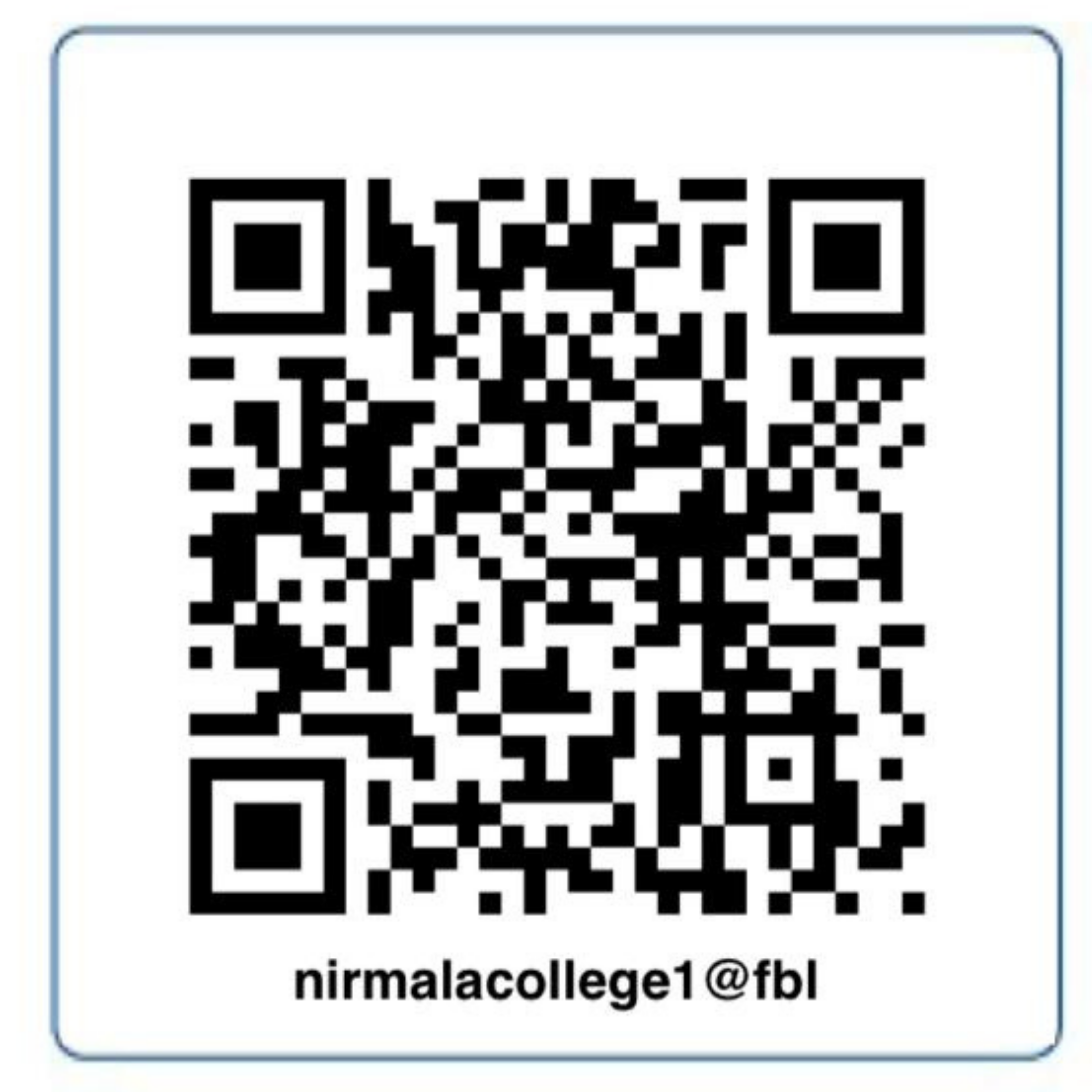
Scan and Pay

QR Code

Payment Reference:
Please mention "[Your Name] – Research Conclave" in the payment description

Bank Payment Details

Account Name: Principal Nirmala College

Account Number: 10090200019932

IFSC Code: FDRL0001009

Bank & Branch: Federal Bank, Muvattupuzha

Payment Reference: Please mention "[Your Name] – Research Conclave" in the payment description

Registration Information

Complete your registration by visiting the conference website and submitting the required details along with payment confirmation.

Email:
conclave@nirmalacollege.ac.in

Contact Information

Nirmala College

Muvattupuzha P.O., Ernakulam Dist., Kerala - 686661
Telephone: 0485 2832361, 2836300
Email: nirmalacollege@gmail.com
Website: www.nirmalacollege.ac.in
Conclave Email: conclave@nirmalacollege.ac.in

Stream Coordinators

Social Science Stream

Dr. Meera R

94465 47534

Science Stream

Dr. Boni Samuel

62380 66868

Applied Science Stream

Dr. Bindu George

99617 13596

Literature & Humanities

Dr. Sobhitha Joy

99615 53023

Organizing Committee

Convener

Dr. Juliya Emmanuel

94962 91939

Organizing Secretary

Dr. Nibu Thomson

94475 89761

Joint Conveners

Dr. Tony Augustine
Dr. David Chris Raju

Coordinators

Ms. Lisa Rachel Saji
Mr. Eric Thomas Joseph
Dr. Jasmine Jose
Ms. Swapna Shaji

Advisory Committee

Mar George Madathikandathil - Patron

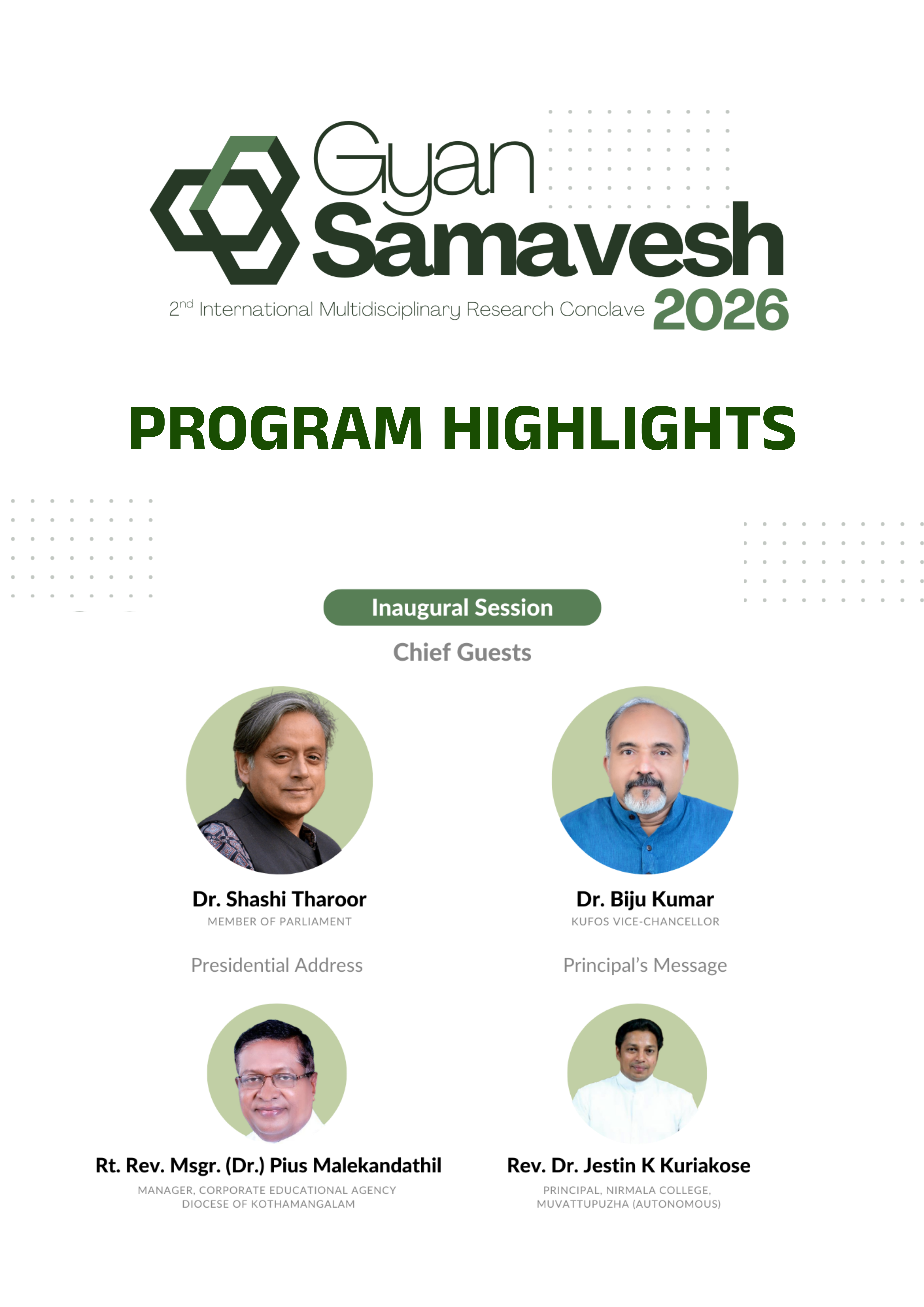
Rt. Rev. Msgr. (Dr.) Pius Malekandathil - Manager

Rev. Dr. Paul Parathazham - Higher Education Secretary

Rev. Dr. Jestin K Kuriakose - Principal

Dr. Gigi K Joseph - Vice Principal, Student Affairs

Dr. Sony Kuriakose - Vice Principal, Academics

Rev. Fr. Paul Kalathoor - Bursar

Dr. Jijo V J - IQAC Coordinator

Prof. Dr. Thomas K V - Director, Autonomous

Prof. Saji Joseph - Administrator, Self Financing Division

Prof. Jose Karikunnel - Liaison Officer